Your feet are like a detailed map of your entire body, with roads leading to every organ and system. A foot reflexology chart is the legend that helps you read this amazing map. It shows you exactly which points to press to help ease tension, reduce stress, and support your overall health. Learning to read this chart is the first step on an exciting journey to wellness.
What Exactly Is a Foot Reflexology Chart?
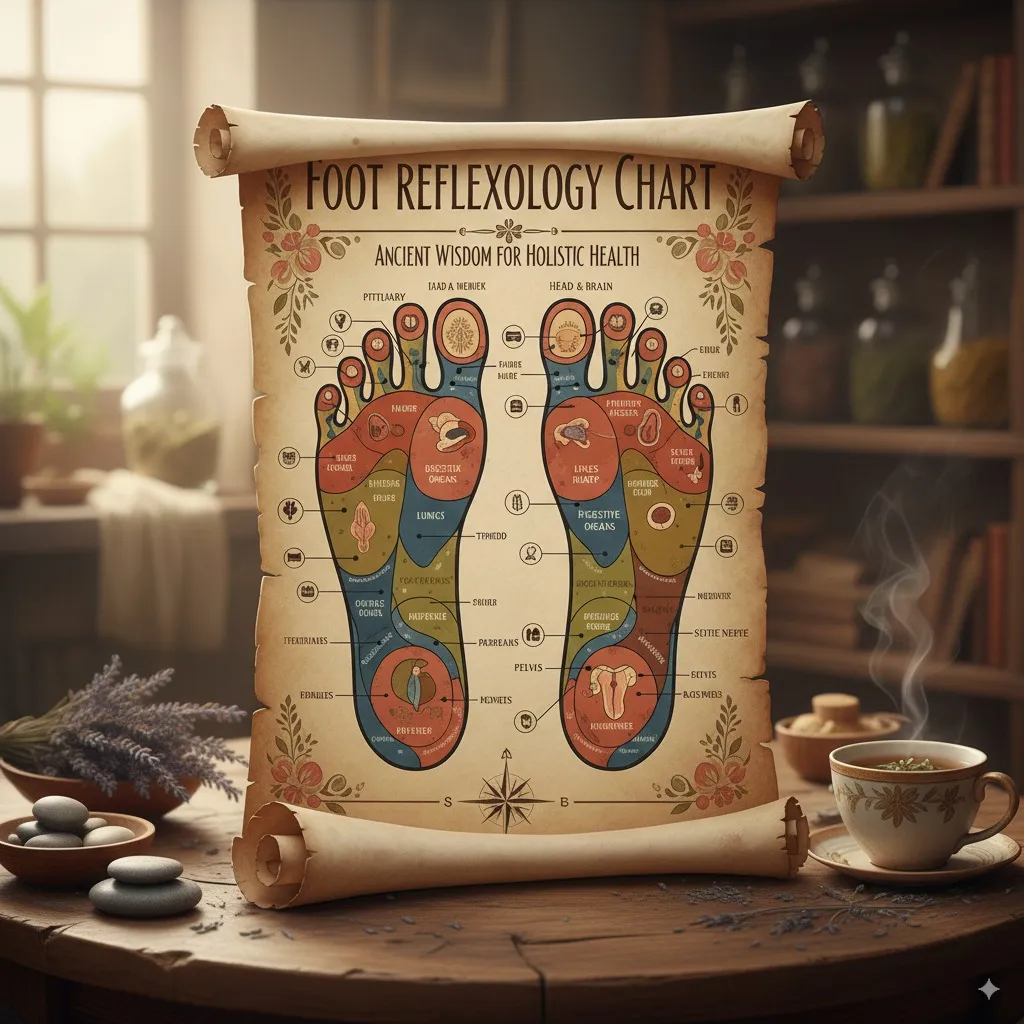
A foot reflexology chart is a visual guide. It shows how specific zones on your feet match up with organs, glands, and systems all over your body.
The idea is that when you apply pressure to these points, you can help promote balance and relaxation in the connected body parts. This is where a reflexology foot points chart becomes incredibly useful, as it shows you exactly where to focus.
How to Read the Chart: A Simple Breakdown
Reading the chart is easier than you might think. It’s all about understanding the different zones and what they represent.
The Left Foot vs. The Right Foot
First, you’ll notice the chart is split between two feet. The foot reflexology chart left foot mostly connects to the left side of your body.
Likewise, the foot reflexology chart right foot, connects to the right side. Some organs, like the heart, are mainly on the left foot’s chart, while others, like the liver, are on the right.
Understanding the Key Zones
The bottom of the foot can be broken down into four main zones. Here is a simple guide:
- The Toes: This area relates to your head and neck, including points for the brain, sinuses, and eyes.
- The Ball of the Foot: This zone corresponds to your chest and has points connected to your heart and lungs.
- The Arch of the Foot: This middle section connects to your digestive system, like your stomach and liver.
- The Heel: This area relates to your lower body, including the lower back and sciatic nerve. While reflexology uses pressure points here, direct treatments like a deep tissue massage work on the back muscles themselves.
Common Reflexology Pressure Points and Their Uses
Now that you know the zones, here are a few common reflexology pressure points and what they are used for:

While you can apply gentle pressure to these spots yourself, a trained professional from Reach Optimal Health knows the exact techniques to get the best results. We can create a session customized to your specific health needs.
A Holistic Approach to Your Well-being
Reflexology is a wonderful practice, but it’s often just one part of a complete wellness plan. Taking a holistic view means caring for your body in many different ways.
We believe in offering a range of bodywork services to help you feel your best from head to toe. This allows you to find the perfect combination of treatments for your unique body and goals.
Combining Ancient Wisdom with Modern Wellness
Today, we can also combine the ancient wisdom of reflexology with amazing modern technology. For those interested in targeted muscle toning, for example, there are new options available. Modern treatments like the TruFlex Treatment offer a different way to strengthen and sculpt the body.
Experience the Benefits for Yourself
Understanding the foot reflexology chart is a great first step. It is a powerful tool for learning about your body’s amazing connections and taking control of your health. We encourage you to contact us and explore how reflexology and other wellness practices can improve your life.
Author Bio
Written by Aurelia Siegel, RMT
Aurelia is a Registered Massage Therapist and the founder of Reach Optimal Health. Her journey began with a search for her own health solutions. Today, she is passionate about helping others find balance and wellness through a holistic approach to care.